Winter in Provence: A Season of Stillness
Winter: A Different Kind of Beauty in Provence
Years ago and long before Tom and I had a home in France, we found ourselves in the hilltop, walled village of Gordes in the Vaucluse area of Provence. It was a summer day with a blue sky of such depth that it looked to be crafted of something solid—a porcelain enamel dome over the earth. The sun so strong that the air surrounding us seemed to ripple with heat and light. Sunshine shown on the stone facades of buildings, turning them to shades of apricot and rose.
From the village heights, we looked down into a valley of vineyards and lavender, the latter a glowing purple blanket. Tourists crowded the narrow cobblestone streets, stopping frequently to gaze in shop windows or read the menu of one of the many places offering food and drink.
Discovering Winter Stillness Through Art
We wandered until we came upon an art gallery, and within we found a pen-and-ink drawing that drew our attention. Entitled “Winter in Provence,” the image, drawn with bronze-colored ink on cream-colored parchment, was one of a farmhouse set among bare trees. The drawing communicated stillness, even a wistful melancholy, as though summer existed as a distant memory.
We purchased the drawing without imagining that winter in Provence would become a season we would cherish.
Tom and I arrive in Provence before Christmas and spend the holidays here, departing once the New Year is already underway. The build-up toward the holiday feels gentle without the insistence on shopping days before Christmas so prevalent in the United States. I joke that if a French person is concerned about shopping days, it will be in reference to orders for wine and champagne, foie gras, and oysters.
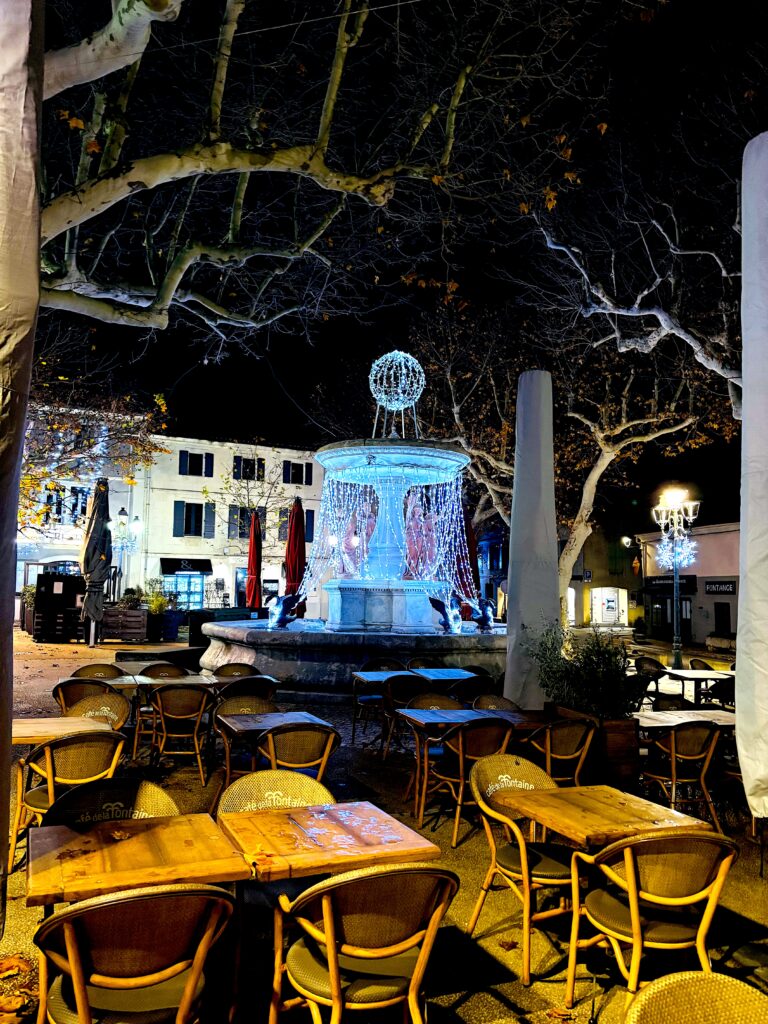
Our village and the neighboring ones each have their own unique decorations—lights wrapped around and suspended from street lamps and strung over the main road, none of them noticeable until after dark, when they look like stars descended from the night sky. Shopkeepers put greenery around the entrances to their stores.
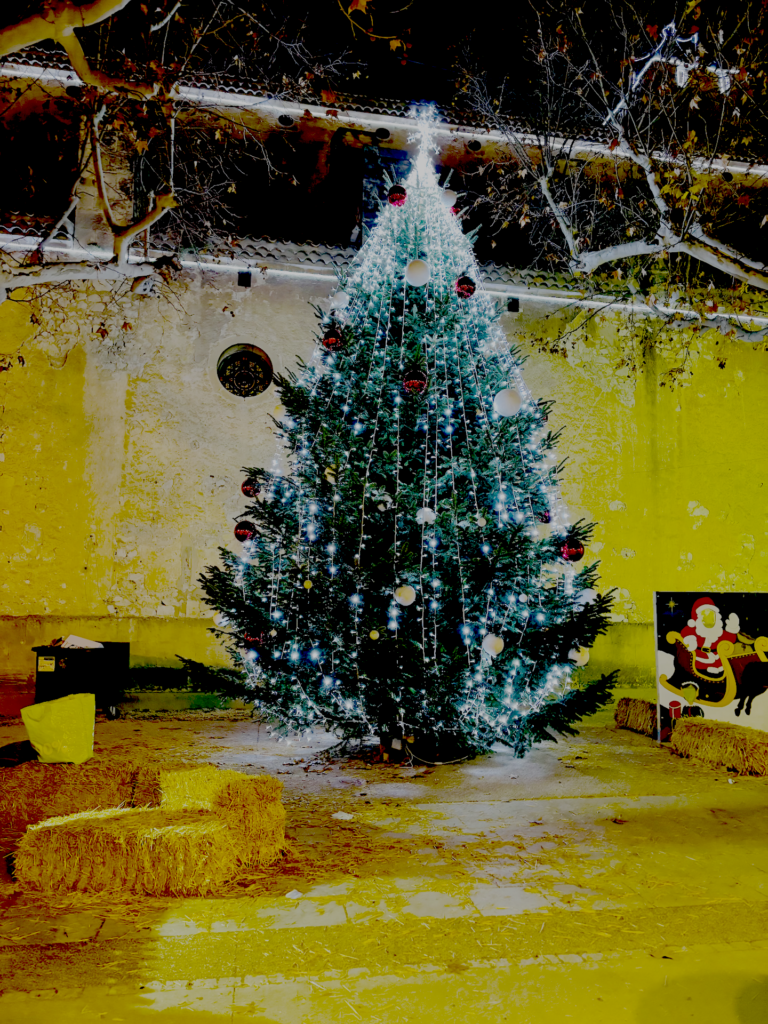
Our village’s Christmas tree, a tall pine, is lit by the mayor during the weekend Christmas market. A small crowd gathers for the lighting of the tree and then disperses to wander the market before settling at one of the two cafes in the village center. The smaller one, Café du Centre, is Tom’s and my preferred establishment because it’s more modest and serves mostly locals.
Provence in Winter: Quiet Villages, Clear Light
Even with the Christmas festivities, the village remains quiet with few tourists and most of the restaurants—there are only a handful—closed so that the restaurateurs can also enjoy the holidays. Most of the people we encounter on our walks either live here year-round or have second homes to which they have returned.
The light changes in winter, becoming a clear, watery blue on sunny days, which are not as abundant as in summer. On this trip, we’ve had days of cold wind followed by rain, the air so damp it feels good on my skin. The other day, when the sunshine returned, I walked to the end of the village, crossing the village square.
Café du Centre’s terrace was filled with people bundled in winter jackets and wool hats sitting around small metal tables, enjoying vin chaud or hot chocolate, perhaps an apéritif before lunch. A celebratory mood prevailed as everyone rejoiced in the sun’s return.
The plane trees that line the village’s main road have been pruned so that the branches resemble small fists raised in protest or triumph, depending on your perspective. The graceful branches of poplar trees, in winter bare of leaves, are taupe on cloudy days and bronze when the sun shines. The tall cypresses look like dark green candles.
With winter’s slower cadence, our village returns to itself. I do not miss the exuberance of summer, but that may be because I know it will return. Right now, it’s enough to enjoy this season of quiet and grace, the shorter days that seem somehow longer than in other seasons when my attention is sometimes scattered. I have more time for reflection. And I, too, return to myself.