The Space In Between

For a time, years ago now, my husband and I took private lessons in Latin and ballroom dance. The studio, where we met with our teacher twice a week, attracted students with a range of interests—training for competitions, improving social dancing skills, or preparing for a single event. Our goals were less specific; we thought learning to dance together would be fun.
I have long since forgotten what I learned in terms of the actual dance steps, but I remember the principles. Now, when I recall those dance lessons, I tend to think about what ballroom dancing suggests about marriage.
What Dance Reveals About Space and Partnership
As dance partners, our roles were complementary, a rather obvious parallel to marriage. Tom, as lead, proposed the dance movement through subtle movements of his hands and body. Those cues had to be gentle—he could not push or pull me into a step—but they needed to be unambiguous, so that his direction was clear. As follow, I responded to Tom’s lead by completing and enhancing our movement.
Occasionally, our teacher asked me to close my eyes while dancing to avoid anticipating or resisting Tom’s lead. Without sight, I had to feel his intention, and that sensitized me to the physical connection between us. It’s a good lesson to learn, especially for someone overly reliant on verbal communication.
In the closed hold typical of many dances, Tom clasped my right hand in his left and placed his right hand on my left shoulder blade. My left hand rested on Tom’s upper arm or shoulder. Our elbows stayed lifted, our shoulders relaxed, our backs straight, and our cores firm. We remained connected but also independent, as neither of us could rely on the other to maintain the necessary upper body positions and the balance that results from a strong dance frame.
Leading, Following, and Trust
Dancing with a partner is a collaboration and a conversation, one based on physical rather than verbal language. Marriage, too, requires cooperation and communication. And, I would suggest a lead and a follow as well, though, as many couples do, Tom and I alternate those roles. Sometimes he initiates some shared effort; sometimes I do.
I preferred the Latin dances because the hip movements felt more natural to me, and I sensed the rhythm in the music. But our teacher encouraged us to work on the waltz. As follow, I added the stylistic flourishes to our waltz by holding my back arched and my head tilted, as though I were immersed in a pleasant dream.
I asked our teacher why she thought the waltz had such potential to showcase Tom’s and my dancing skills, such as they were, and she told me that when we got it right, Tom presented me in a beautiful way.
And I thought about how we did that for each other in our marriage. At our best, we inspire each other toward fineness of character and behavior.
The Space Between Two People
I once read a quote by a professional ballroom dancer that has stayed with me. She said that the beauty of the dance does not depend on the movements of the individual dancers; it depends on the space that they create between them.
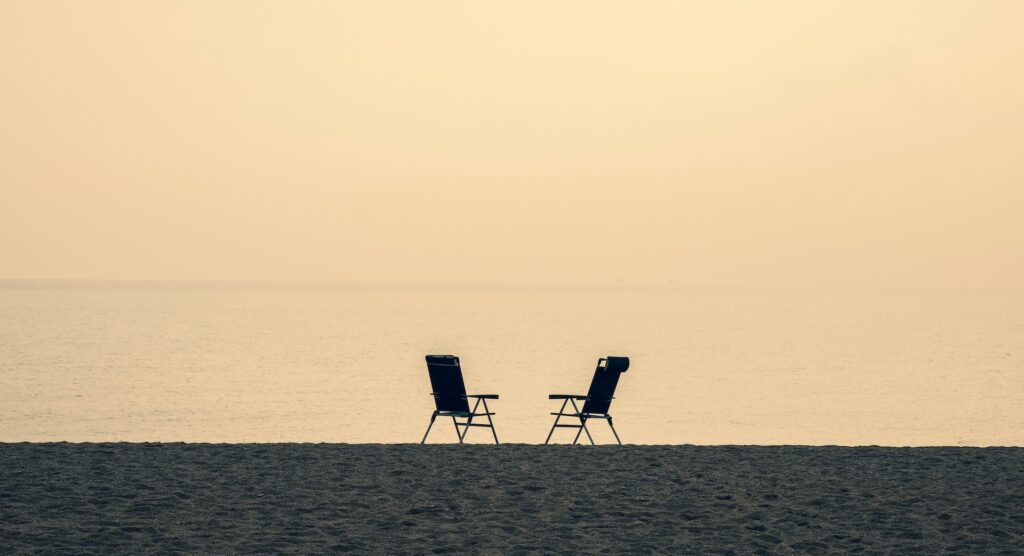
Sometimes I think of Tom’s and my marriage as the space in between, that third thing that exists apart from but because of us. It holds our shared past, present, and future. Within it dwells possibility and the potential for grace.
***
My memoir, “The History We Carry: A Daughter’s Memoir,” will be released in June 2026 by SheWritesPress.
Here’s the cover!

Beautiful. I love how you massage words into such lovely and relatable phrases, Margaret.